
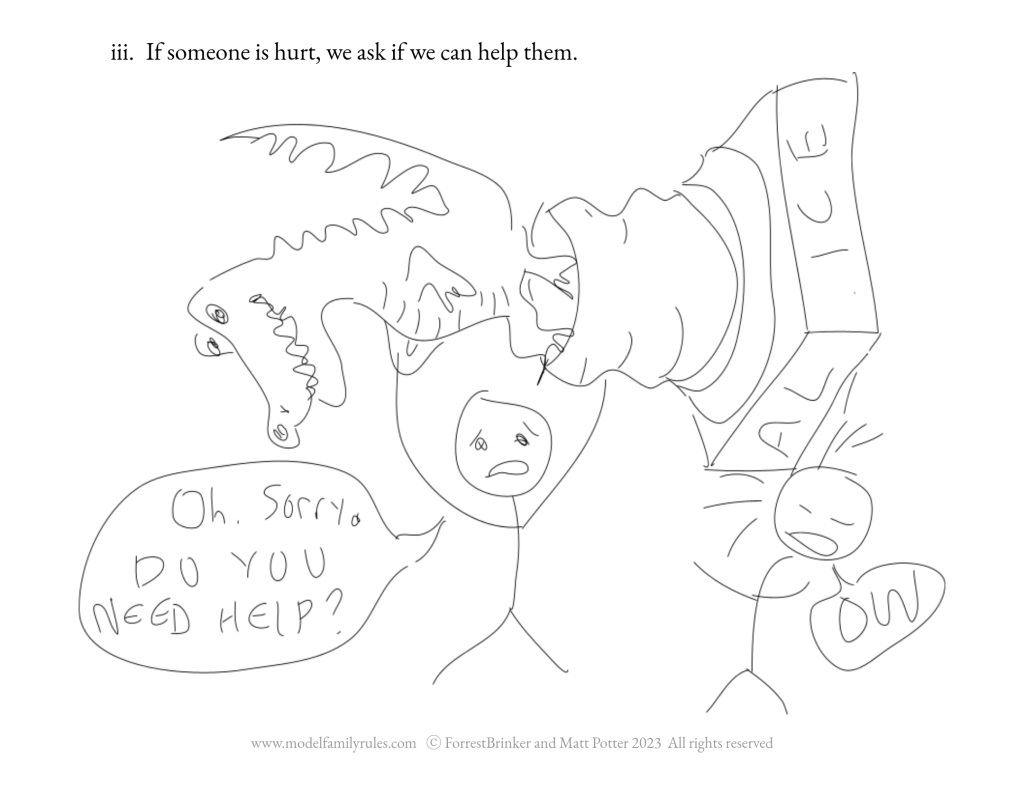
If someone is hurt, we ask if we can help them.
If someone is hurt, we ask if we can help them.
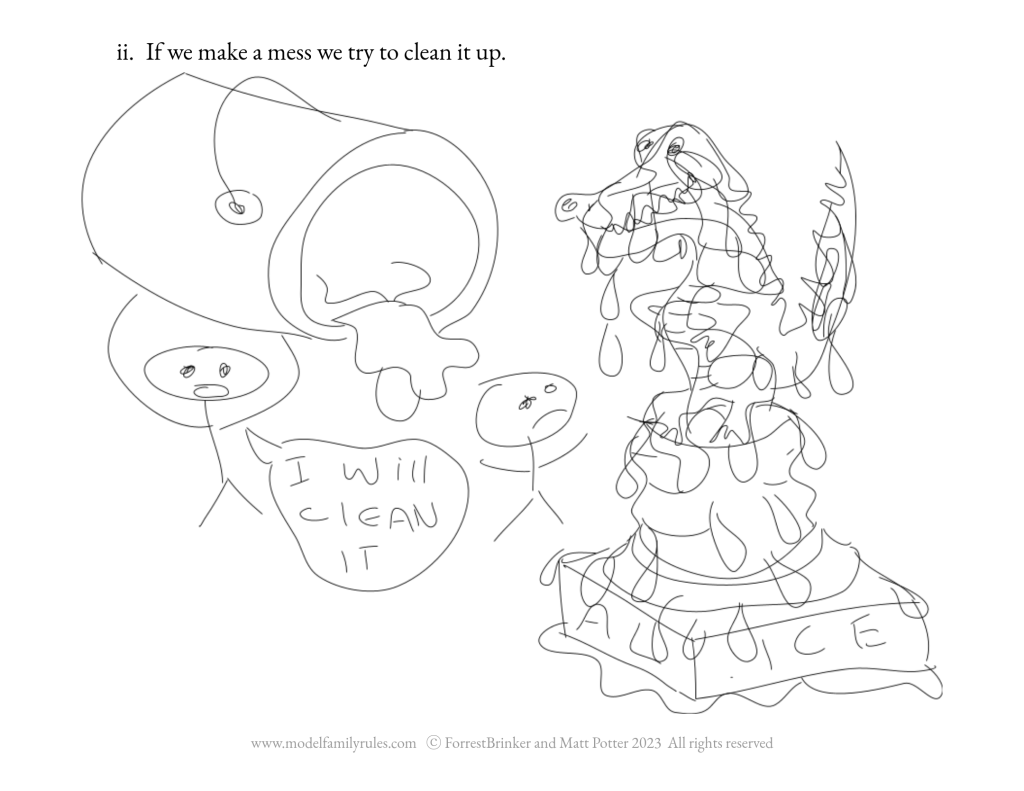
If we make a mess we try to clean it up.
We are kind with the truth.
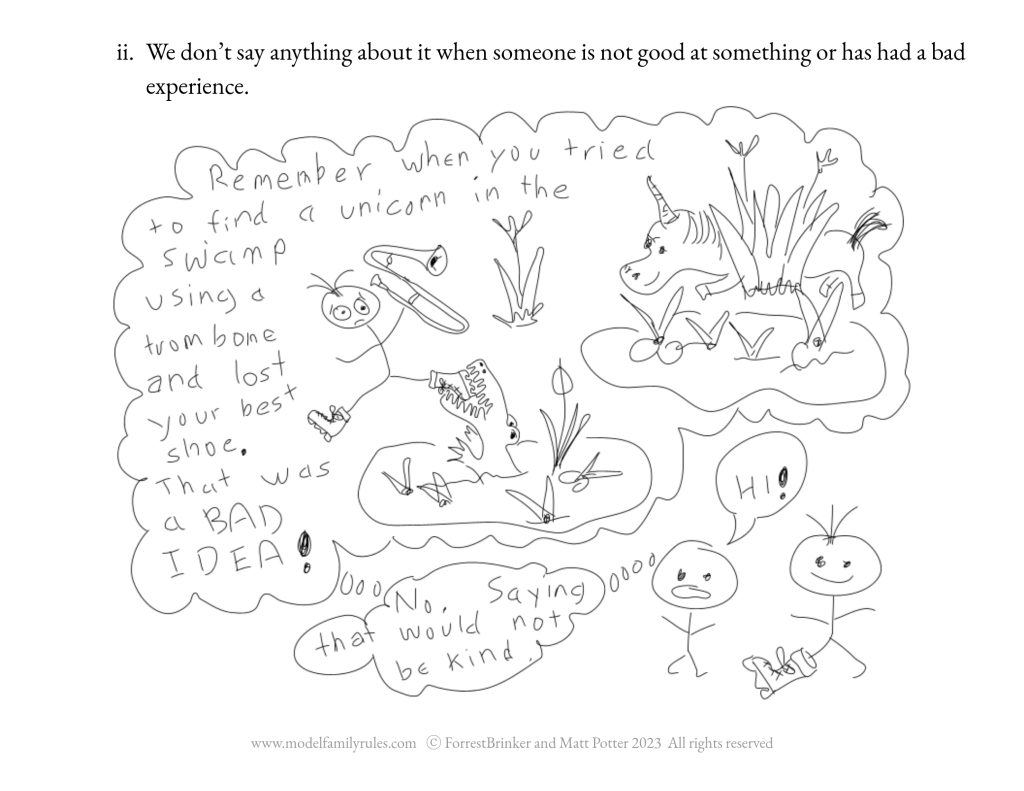
We don’t say anything about it when someone is not good at something or has had a bad experience.
We face hard truths.
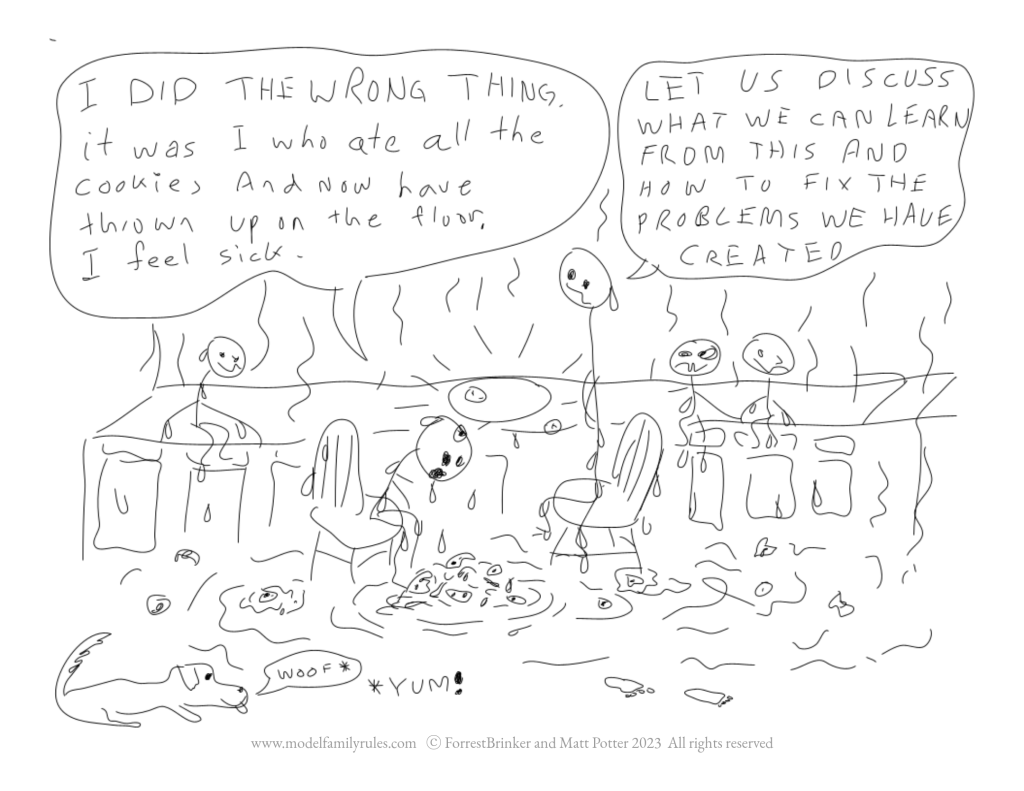

We face hard truths.

If we start to have difficult feelings that we can’t control, it is good to close our eyes and try to focus only on our breathing until our minds are clear.
We can say calming words to ourselves. These are good ones: I breathe in, I breathe out. My thoughts and feelings move away like clouds in the sky, like fish in the sea, like trains in a station. They drift away like the mist of my breath on a cold day. But I am the sky not the clouds, the sea not the fish, the trains not the station. I am the breather, not the breath. I watch my thoughts and feelings move through me and away from me until only I remain and I am clear and still.
There are many other things that can help us calm down. Some good ones are: counting to 100, counting backwards from 100 to 0, solving math problems, playing chess, solving chess or logic puzzles, playing music ,and exercising. It is much easier not to be controlled by our feelings when we do any of these things.
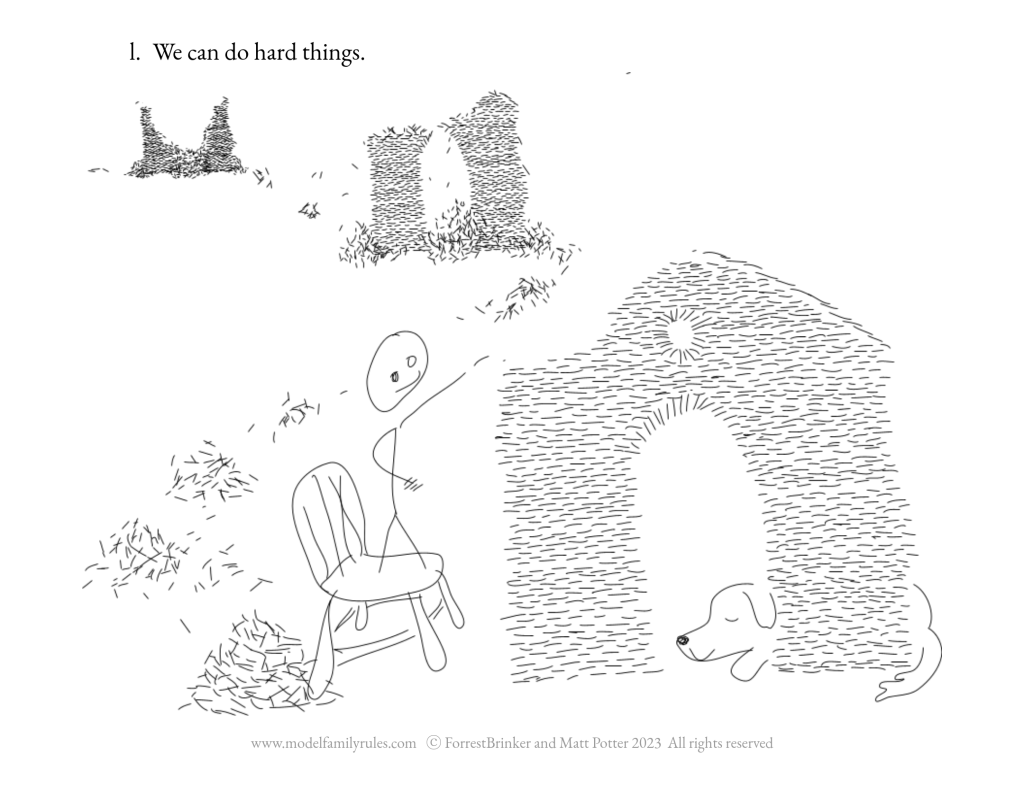
We can do hard things.
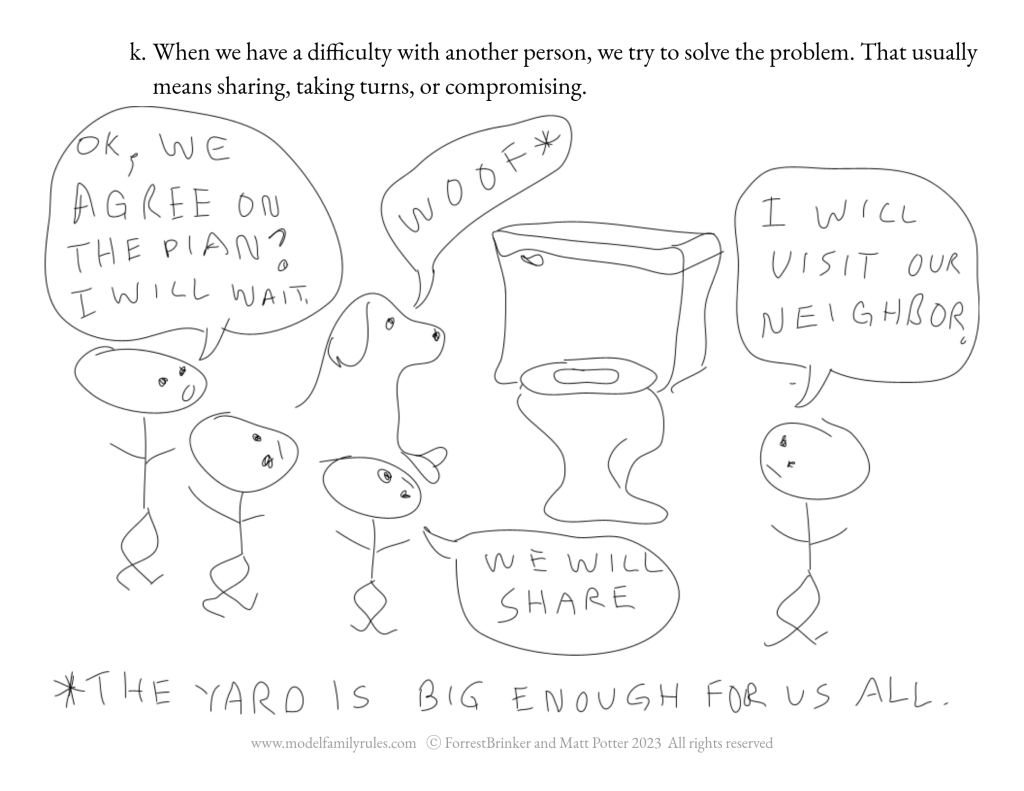
When we have a difficulty with another person, we try to solve the problem. That usually means sharing, taking turns, or compromising.
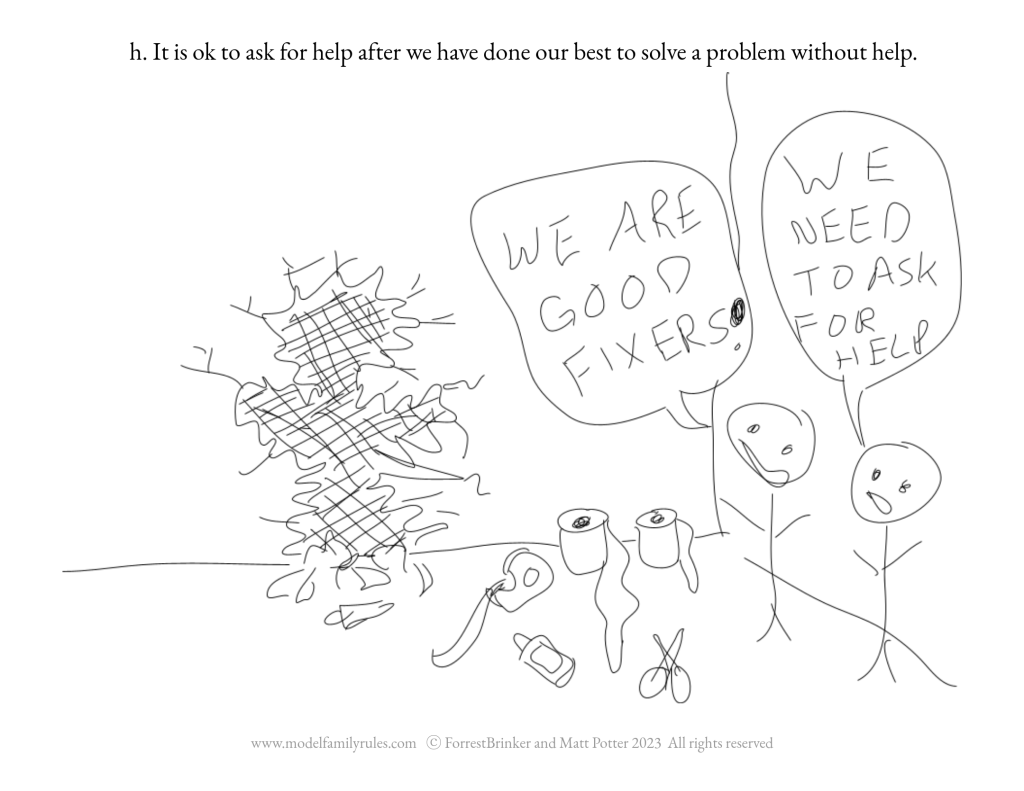
It is ok to ask for help after we have done our best to solve a problem without help.

When we are having a problem doing something by ourselves, we slow down, take a breath, and think carefully about how we might solve the problem.
 Model Family Rules